Procurement Guide: Why Buyers Choose Value-Quality Balance in Waterproof Mattress Protectors
Introduction: The Smart Buyer's Challenge
Driven by growing demand from residential consumers and commercial sectors such as hotels and healthcare, the global waterproof mattress protector market is expanding rapidly. Whether they are chain stores, retail brands or institutional buyers, international purchasers face a clear challenge: how to select reliable products without exceeding their budget.
From low-cost imported premium-branded products to other offerings, the market provides diverse options. Products across various price points cover all price ranges. Greater emphasis is placed on the concept of transcending simple cost analysis: achieving a balance between value and quality. This guide explains what this balance entails, how to assess it fairly, and why it is the optimal approach to achieving profitable, sustainable procurement
Part I: What "Value-Quality Balance" Really Means
In business-to-business sourcing, "value" is frequently mistaken for "low price." However, true value is a ratio that is calculated by dividing the total cost incurred by the benefits provided. A best value waterproof mattress protector is one that offers dependable performance, complies with regulations, and reduces long-term risks at a reasonable cost is considered to be the best value; it need not be the cheapest on paper.
Why is this distinction important? Think about the unstated expenses associated with pursuing the lowest quote. Cheap adhesives that delaminate during transit or subpar membranes that crack after a few washes could be used in a protector that costs 30% less than the market average. The outcome? The initial savings are greatly outweighed by customer complaints, returns, and brand damage. Approximately 45% of customers who buy inexpensive mattress protectors encounter product failure within months, according to industry data.
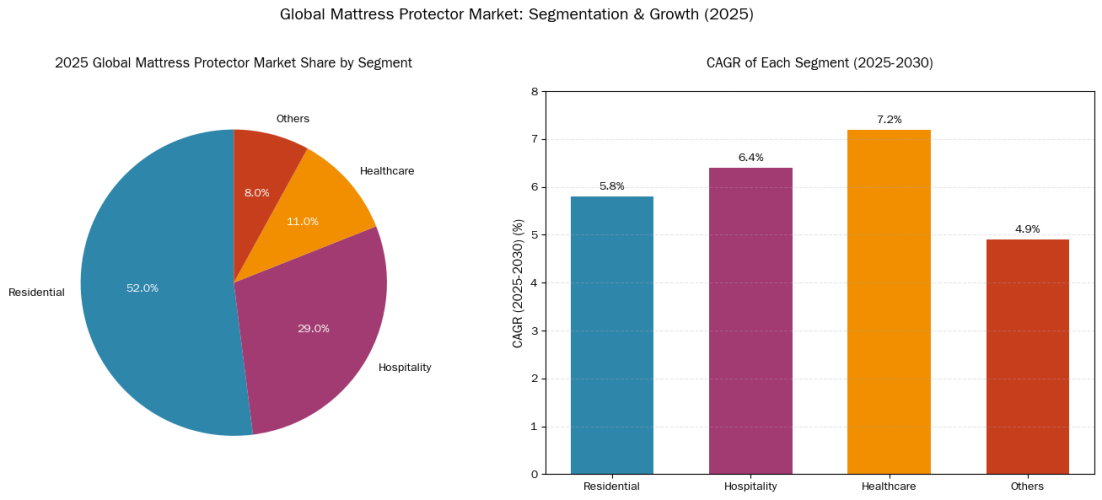
This is why a growing number of international buyers now follow a structured mattress protector buying guide approach before committing to large orders. The cost-effective mattress protection strategy considers factors beyond the unit price. It assesses the entire cost of ownership, including defect rates, customer satisfaction, return procedures, and the damage to one's reputation from selling underperforming goods. Competitors who compete solely on price are routinely outperformed by foreign buyers who grasp this calculus.
Part II: How to Evaluate Quality—Beyond Surface Claims
Quality in a waterproof mattress protector is multidimensional. To make informed decisions, procurement professionals must assess several interconnected factors.
Materials and Waterproof Technology
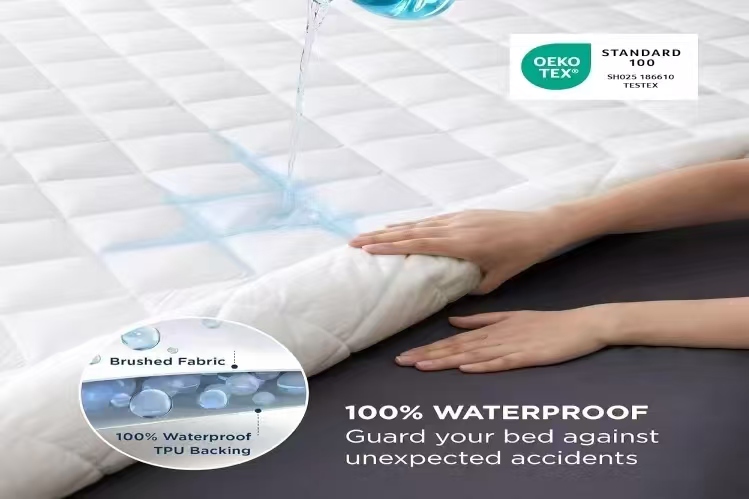
To create a truly waterproof barrier requires a continuous film layer, which is usually composed of polyurethane (PU) or thermoplastic polyurethane (TPU). This film layer needs to keep a certain amount of breathability while also totally blocking liquids. Compared to PU substitutes, our products' TPU film layers provide better waterproofing, increased flexibility, and improved environmental friendliness. We give preference to TPU because of its exceptional durability and environmentally friendly qualities, even though PU film layers are more affordable and frequently utilised in low-end products.
The outer fabric is also important. Cotton is still a popular material because of its low allergenicity and softness, especially for customers with sensitive skin. Polyester offers exceptional durability and affordability, while the popularity of bamboo waterproof mattress protector options is growing due to its inherent antibacterial properties and sustainability.Certifications like OEKO-TEX Standard 100 and GRS (Global Recycled Standard) are useful tools for purchasers aiming for environmentally conscious markets.tools.
Engineering for Comfort and Breathability
Heat retention is one of the most frequent grievances regarding waterproof protectors. Conventional non-porous membranes have the potential to retain body heat, impairing the quality of sleep. Micro-porous TPU layers and moisture-wicking top sheets that improve airflow are two ways that modern manufacturing addresses this. Check for breathability when assessing samples; high-quality materials will permit airflow while maintaining total waterproofness.
Construction and Durability
The weakest areas of any protector are the seams. Reinforced stitching—double-stitched or bound seams that stop leaks over time—is a feature of high-quality products. Examine the elastic edges as well; they should stretch to accommodate different mattress depths (8–18 inches) while still fitting snugly even after several washings. To confirm performance after 20, 50, or 100 cycles, request wash test reports.
Certifications: The Must-Have Proof
Good suppliers easily give you:
OEKO-TEX Standard 100: Ensures no harmful substances
ISO 9001: Validates consistent quality management
ISO 811 test reports: Verifies waterproof performance (8,000mm minimum recommended)
When you sell in Europe you need these certifications. They are required to enter the market.Buyers need these certifications for markets they are not optional they are necessary.
Part III: Understanding Price—What You're Really Paying For
Price transparency is essential for value assessment. Understanding what drives costs helps buyers identify fair pricing versus hidden compromises.
Cost Drivers in Manufacturing
The biggest expense component is the bill of materials. While breathable TPU models with bamboo topsheets can cost up to $5.0–7.5, a typical queen-size PU-coated protector might cost $2.5–4.0. Custom packaged premium options can cost more than $8.5 to $12.0 These variations are a reflection of actual quality differences: elastic quality, fabric GSM, and membrane thickness all affect longevity and performance.
Economics of Volume
Unit prices for bulk purchase mattress protector orders drop significantly as quantities rise.While a 1,000-piece order can lower unit costs by 30–40%, a 300-piece order might command one price point. The purchasing power of raw materials, production line efficiency, and fixed cost dilution are all reflected in this scale effect. In order to attain the best pricing without overcommitting to inventory, astute buyers balance order quantities.
Priced protectors often have extra costs.
A supplier with low prices may use thin membranes skip safety tests or use wrong chemicals.These shortcuts can cause problems for buyers, in markets.For example customs may. Seize products or buyers may face liability claims.Moreover cheap protectors often have defects.A truly cost-effective mattress protection strategy accounts for these factors, recognizing that the lowest purchase price rarely equals the lowest total cost.
Part IV: Finding the Sweet Spot—Practical Selection Strategies
A Framework for Evaluation
When you want to make a decision about what to buy it is really helpful to follow a simple step-by-step approach to find the best balance between what you need and what you can get.
Step 1: Define Your Market Requirements
It’s important that If you want to sell things in Europe you have to follow the OEKO-TEX Standard 100 rules. The GRS certification is also significant because it shows that you care about using materials.For people who buy things in North America the OEKO-TEX Standard 100 and ISO 9001 quality management are very important. They want to know that they can count on you to deliver products.When it comes to hotels and restaurants they need things that will last and are always of quality. The ISO 9001 certification helps to prove this.In hospitals they need things that're easy to clean and can stop the spread of germs. This is because they have to keep everything clean to keep people healthy
Step 2: Verify Technical Documentation
You should ask the people you are buying from for reports from labs that show the results of tests details about the materials, certification documents and how they test each batch of products. Check if these reports match what the suppliers are telling you. If a supplier says their product meets standards they should be able to show you test reports to prove it.
Step 3: Evaluate Samples Systematically
Obtain samples and test them against your requirements: waterproof performance, breathability, durability after multiple washes, and correct sizing for standard mattresses. This hands-on evaluation is the most reliable way to determine if a waterproof mattress protector meets your quality thresholds.
Step 4: Calculate Total Cost of Ownership
Make a spreadsheet to compare the prices of products. Include the price of each unit the cost of shipping any duties you have to pay how often the products might be defective the cost of handling returns and the risk of not meeting the compliance standards. Sometimes paying a more for a product that has been certified and tested can actually save you a lot of money in the long run because it can cost 30-40% less over the lifetime of the product even if it is 15-20% more expensive, at first.
Part V: Conclusion—The Astute Purchaser's Option
There are many options in the global market for mattress protectors, but not all of them are created equal. Long-term successful foreign purchasers understand that value is what you receive and pricing is what you pay. The mattress cover that constantly satisfies end users, upholds brand reputation, and satisfies market standards is the best value.
This mattress protector buying guide has outlined the framework: assess materials and technology, verify certifications, understand cost factors, and calculate actual lifecycle costs. Finding partners that provide quality at reasonable prices—suppliers who recognise that their success depends on your success—is more important than trying to find the cheapest solution.
Frequently Asked Questions
1. Are all waterproof mattress protectors truly waterproof?
No. True waterproof protectors contain a continuous PU or TPU membrane that blocks liquids completely. Many "water-resistant" models only repel light spills. Always verify hydrostatic pressure ratings (≥8,000mm) and request test reports from accredited labs.
2. What are typical timelines for samples and production?
Sampling typically takes 10–15 days. Bulk production for standard items ranges from 30–35 days; custom designs may extend to 45 days. Sample costs are often credited toward the first order.
3. How can I verify a manufacturer's compliance with international standards?
Request third-party certifications including OEKO-TEX Standard 100, GRS, and ISO 9001. Reputable manufacturers provide full traceability of raw materials and can arrange virtual factory tours to demonstrate quality control processes.
4. What are minimum order quantities for custom sizes?
MOQs typically range from 500–2,000 pieces depending on complexity. Many suppliers offer lower MOQs for initial trial orders to establish partnership.
Ready to Source with Confidence?
Selecting the right waterproof mattress protector supplier is a strategic decision that impacts your brand's reputation and bottom line. We invite you to request our detailed technical specifications, third-party test reports, and sample kits to evaluate our quality firsthand.
Contact us today to discuss your requirements and discover how our value-quality balance can support your success.